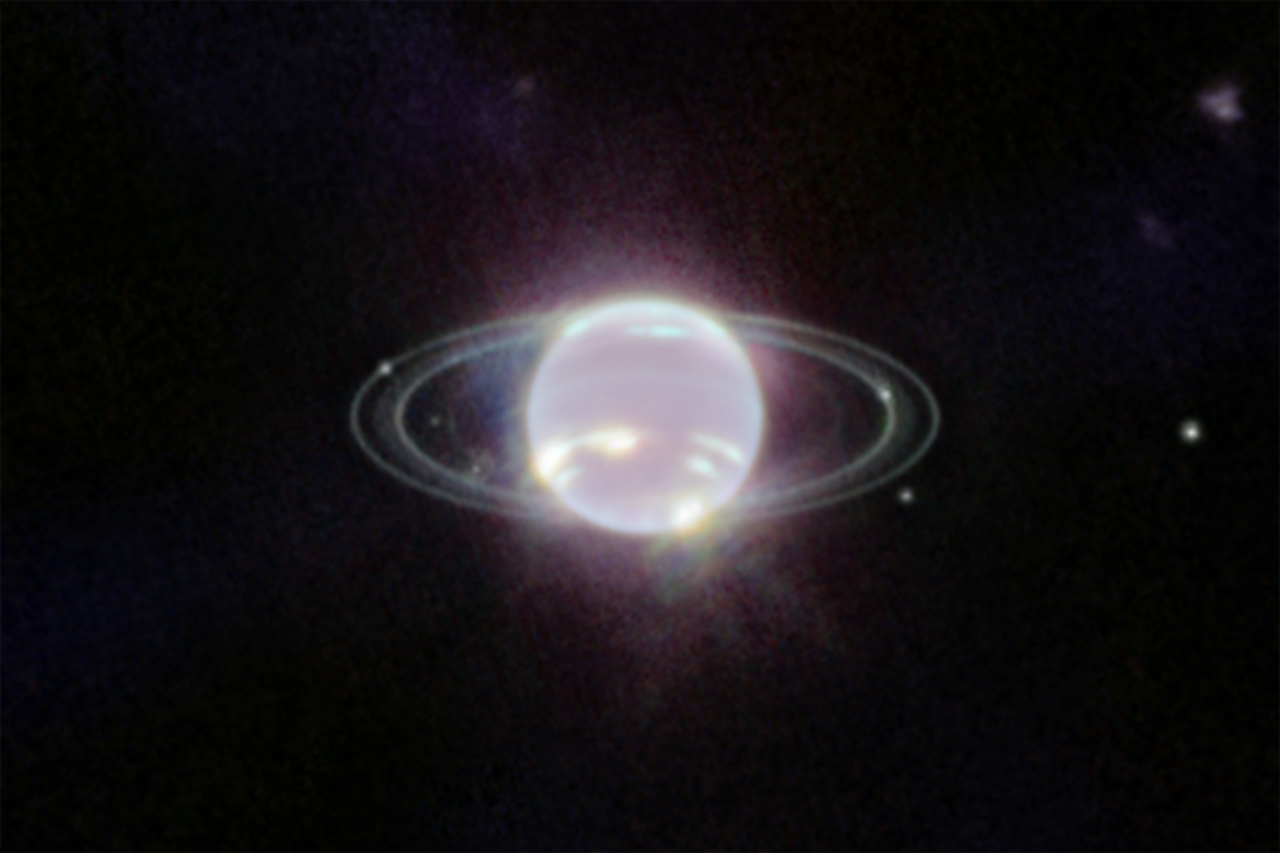
September is the reset month. The summer core targets in Cygnus and Sagittarius are still overhead in the early evening, but the sky is finally cooperating with an earlier sunset, and the fall's headline targets — Andromeda first among them — are climbing into position by 10 PM. If you own a smart scope, this is when the calendar starts working with you instead of against you. New here? The first-night setup guide covers the basics before you head out.
The New Moon lands September 11 (UTC), which opens a genuine dark window from roughly September 8 through September 14. Warm-enough nights, real darkness by 9 PM at mid-northern latitudes, and Andromeda hitting a good imaging altitude before midnight. Here's the plan.
The headliner: Andromeda Galaxy (M31)
If you image one deep-sky target in September, make it M31. The galaxy is enormous — about six times the width of the full Moon end to end — which means every smart-scope framing decision comes back to "single frame of the core, or mosaic for the outer arms." Both answers are correct. The core is beautiful on its own and takes 30 minutes; the full extent, including the companion galaxies M32 and M110, takes real integration time and a mosaic plan.
| Setting | Seestar S50 | Dwarf 3 | Vespera 3 |
|---|---|---|---|
| Filter | Off (broadband) | Off (broadband) | Off (broadband) |
| Exposure | 10s subs | 15s subs | 10s subs |
| Integration | 60–180 min | 60–180 min | 60–180 min |
| Framing | Mosaic (2–3 panels) or crop to core | Single frame (wider field fits most of it) | Mosaic mode |
Dual-band filters stay off — this is a galaxy, not an emission nebula, and a narrowband filter will just eat all the broadband star and dust-lane light you're trying to capture. Andromeda transits high in the northeast around midnight in early September and earlier as the month goes on. Full imaging settings and target notes live in the Andromeda Galaxy target guide.
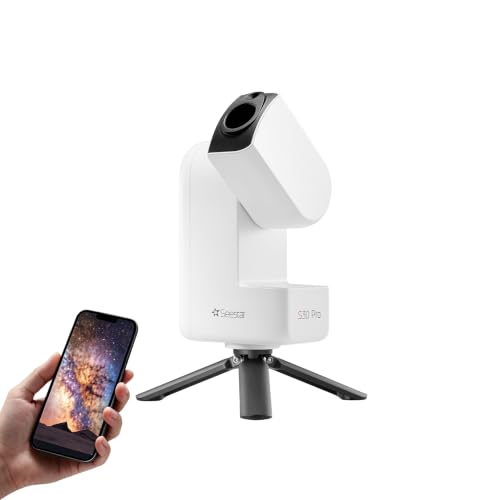 ZWO Seestar S30 Pro30 mm apo triplet, EQ tracking mode, built-in dual-band filter — the widest field of any smart scope in its price bracket, which is exactly what a target like Andromeda wants.
The fall galaxy warm-up: Triangulum (M33)
Right next door to Andromeda, and dramatically harder. M33 is a face-on spiral, which sounds photogenic and is, but the surface brightness is low — the light is spread across a wide, faint disk instead of concentrated in a bright core. That means integration time matters more than for almost any other Messier target. Plan for a minimum of 90 minutes; two to three hours starts revealing real spiral structure and the pink HII knots that give M33 its character. The Dwarf 3's wider main lens and the Vespera 3's mosaic pipeline both handle M33 well; the S30 Pro benefits from mosaic mode. Filter off, same as Andromeda.
The reliable seconds
North America Nebula (NGC 7000). The August headliner is still overhead through most of the September dark window. Dual-band filter on, mosaic mode. Everything from the August plan still applies.
Veil Nebula (NGC 6960/6992). The supernova remnant sits right next to Cygnus and responds beautifully to a dual-band filter. Two panels covers the Eastern and Western Veil separately; a mosaic ties them into the full loop.
Dumbbell Nebula (M27). Small enough to fit a single frame, bright enough to reward short sessions. Full settings in the M27 target guide.
Neptune at opposition — September 25–26
This is the one calendar entry no other month offers. Neptune reaches opposition around 10 PM EDT on September 25 (just after midnight UTC on the 26th), which means it rises at sunset, sets at sunrise, and shines at its brightest for the year — a still-modest magnitude 7.7. Every smart scope can pick it up; the question is what you'll actually see.
At maximum magnification, Neptune resolves as a tiny blue-gray disk about 2.4 arcseconds across. No cloud detail, no rings — you need a telescope like Webb for that, and Webb's near-infrared portrait is what's at the top of this page. What you'll get from a smart scope is confirmation: it's not a star. It's the eighth planet, and you found it.
Neptune is in Pisces this year, not far from Saturn, which will help you land the field. The Full Moon lands on September 26, so if you can, shoot Neptune a night or two before opposition when the sky is darker. It moves slowly against the background stars — the exact date matters less than the moonlight does.
Venus at greatest brilliancy — September 18
Venus is impossible to miss in the western sky after sunset all month, and it peaks in brightness on September 18. Through a smart scope, Venus doesn't look like a small full moon — it looks like a bright waxing crescent, because it's moving between us and the Sun and we're seeing more of its dark side each week. That's the shot: catch the crescent phase.
Only observe after the Sun is completely below the horizon. Then use lunar mode, dial exposure way down, and expect blown-out edges on your first attempts. Venus is bright enough that most smart scopes will overexpose the first frame; drop exposure two or three stops from the default and re-evaluate.
International Observe the Moon Night — September 19
NASA's annual global event lines up nicely this year: First Quarter Moon is on September 18, so the Moon on the evening of the 19th is roughly 60% illuminated with a dramatic terminator running down the middle of the disk. That's exactly when lunar craters look most three-dimensional — long shadows, high contrast, real texture.
Both Seestar and Dwarf have dedicated Moon modes that handle exposure automatically. The Moon imaging guide covers the full settings, including how to shoot a high-resolution mosaic of specific crater fields like Copernicus or Tycho instead of the whole disk.
The Harvest Moon — September 26
September closes with the Full Harvest Moon on the 26th, the Full Moon closest to the autumn equinox (which fell on September 22–23 depending on your time zone). Deep-sky imaging is a lost cause for a few nights either side, so pivot to lunar work or scenic moonrise photography.
The trick with any full Moon shot is composition: shoot it near the horizon at moonrise with a foreground you've scouted, not against an empty black sky at midnight. A long focal length compresses the scene and makes the Moon look larger relative to whatever you frame it against. Check the moonrise direction the day before and walk your foreground positions.
The September plan, in one paragraph
Save September 8–14 for deep sky. Andromeda first, Triangulum second, Cygnus targets to fill the early evening. September 18–19 is the easy-outreach weekend: Venus at max brightness, First Quarter Moon, Observe the Moon Night. September 25–26 gets you Neptune at opposition and then the Harvest Moon. Everything in between is filler on your remaining Cygnus mosaic runs.
Still deciding what to shoot with? Our price-tier buying guide covers every option from $399 up, the filter guide explains why "off" is the right answer for the whole first half of this month's plan, and the Siril processing guide is what turns a decent Andromeda stack into a genuinely good one.
Next month: Orion and the Pleiades take over the second half of the night, Uranus reaches opposition, and the Orionids peak on a favorable Moon. The October plan publishes on the 1st.