
Three years ago "smart telescope" meant spending $3,000 or trusting a Kickstarter. In 2026 it's a proper product category with a ladder of price tiers, and — unusually for consumer tech — every rung on the ladder is actually good. The question isn't "which one is best," it's "which tier are you in?"
Fastest answer
Buy in the $499–599 tier (Dwarf 3 or Seestar S30 Pro) unless you already know why you need more aperture or a bigger budget — it's where price, image quality, and features actually balance out. Full reasoning for every tier below.
The $399–449 tier: proof it works
The entry tier gets you the full smart telescope experience — app-driven GoTo, live stacking, solar imaging with the included filter — with smaller optics and sensors (full ZWO Seestar lineup). The S30's wide field is friendly to beginners because big targets fit without mosaics. This tier is the right answer for gifts, kids who've shown real interest, and anyone testing whether the hobby sticks. The images will genuinely impress you; they just won't survive heavy cropping. For what a realistic first session looks like once it arrives, see our first-night setup guide.

 DwarfLab Dwarf MiniDwarfLab's entry-tier answer to the S30
The $499–599 tier: where most people should buy
This is the sweet spot, and it's crowded for a reason. The Dwarf 3 (~$499) brings an 8.3MP sensor, a built-in filter wheel, and best-in-class portability (DwarfLab's official specs) — see our full Dwarf 3 review for the long-term verdict. The S30 Pro ($549) adds equatorial-mode tracking for rounder stars in long stacks. The original S50 ($499) is discontinued but remains the aperture king of the tier while retailers have stock — and its successor, the S50 Pro, is expected later this year at a reported $599–799.
 DwarfLab Dwarf 38.3MP sensor, our top pick in this tier — full review
If you're buying in this tier right now: travel and flexibility → Dwarf 3; fixed backyard → S30 Pro or remaining S50 stock. See our full comparison for the wait-or-buy question.
The $1,500–2,999 tier: the enthusiast step
The Vaonis Vespera models (compare the lineup) are what happens when a French design team decides smart telescopes should be beautiful and sharper. Better optics, more refined mosaics ("CovalENS"), and image quality that starts to justify wall prints. The honest question at this tier: are you sure you wouldn't rather have a conventional rig (mount + small refractor + dedicated camera) for the same money? If tinkering appeals to you, maybe. If you want results without a second hobby in cable management, the Vespera is the answer.
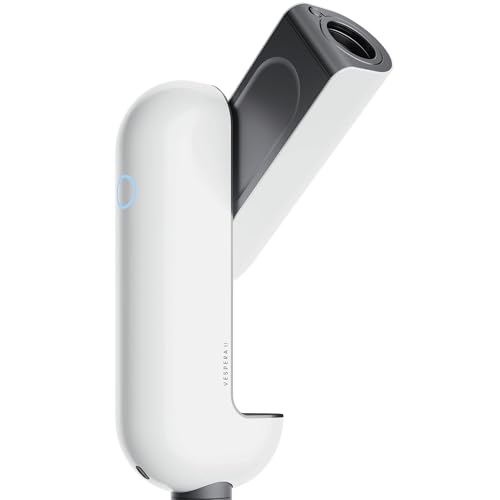 Vaonis Vespera lineSharper optics and refined mosaics, premium tier entry — Vespera 3 review
The $4,000+ tier: the observatory appliance
Large apertures, citizen-science integrations (Unistellar's Odyssey line users contribute real occultation and exoplanet-transit data), and in Celestron's case a 6-inch RASA optical system that gathers more light than everything else on this page combined. These are wonderful and most readers should not buy them — the price of one Origin is eight Dwarf 3s. The exception: schools, outreach programs, and anyone for whom the citizen-science angle is the point.
 Unistellar Odyssey / Odyssey ProCitizen-science network built in — Pro review
 Celestron Origin Mark II6-inch RASA optics, the observatory appliance
The accessory line nobody budgets for
Whatever tier you buy: a power bank (all-nighters), a sturdier tripod (wind is the enemy of stacking), and a proper case if yours doesn't include one. Call it $75–150 on top of any scope, and it improves your results more than stepping up a tier would.
Bottom line
Most readers should buy in the $499–599 tier and spend the savings on dark-sky trips. The images these machines produce per dollar and per minute of effort would have been science fiction in 2020 — and the target library you point them at matters more than the badge on the tube. That part, conveniently, is what this site is for.
DwarfLab Dwarf 335 mm f/4.3, 8.3 MP IMX678, built-in filter wheel