Every smart telescope ships with at least one filter, and almost every new owner uses it wrong at least once — usually by leaving a nebula filter on for a galaxy shot and wondering why the result looks dim and off-color. The fix is simpler than the marketing names suggest: there are really only two decisions to make, and they depend entirely on what you're pointing at, not which scope you own.
The two filter types that matter
UV/IR cut. A basic filter that blocks ultraviolet and infrared light your sensor can't focus properly alongside visible light, sharpening stars slightly. It doesn't fight light pollution. Use it for anything broadband: galaxies, star clusters, the Moon, planets. This is close to "no filter" in effect — some owners just shoot broadband targets with no filter at all if their scope allows it.
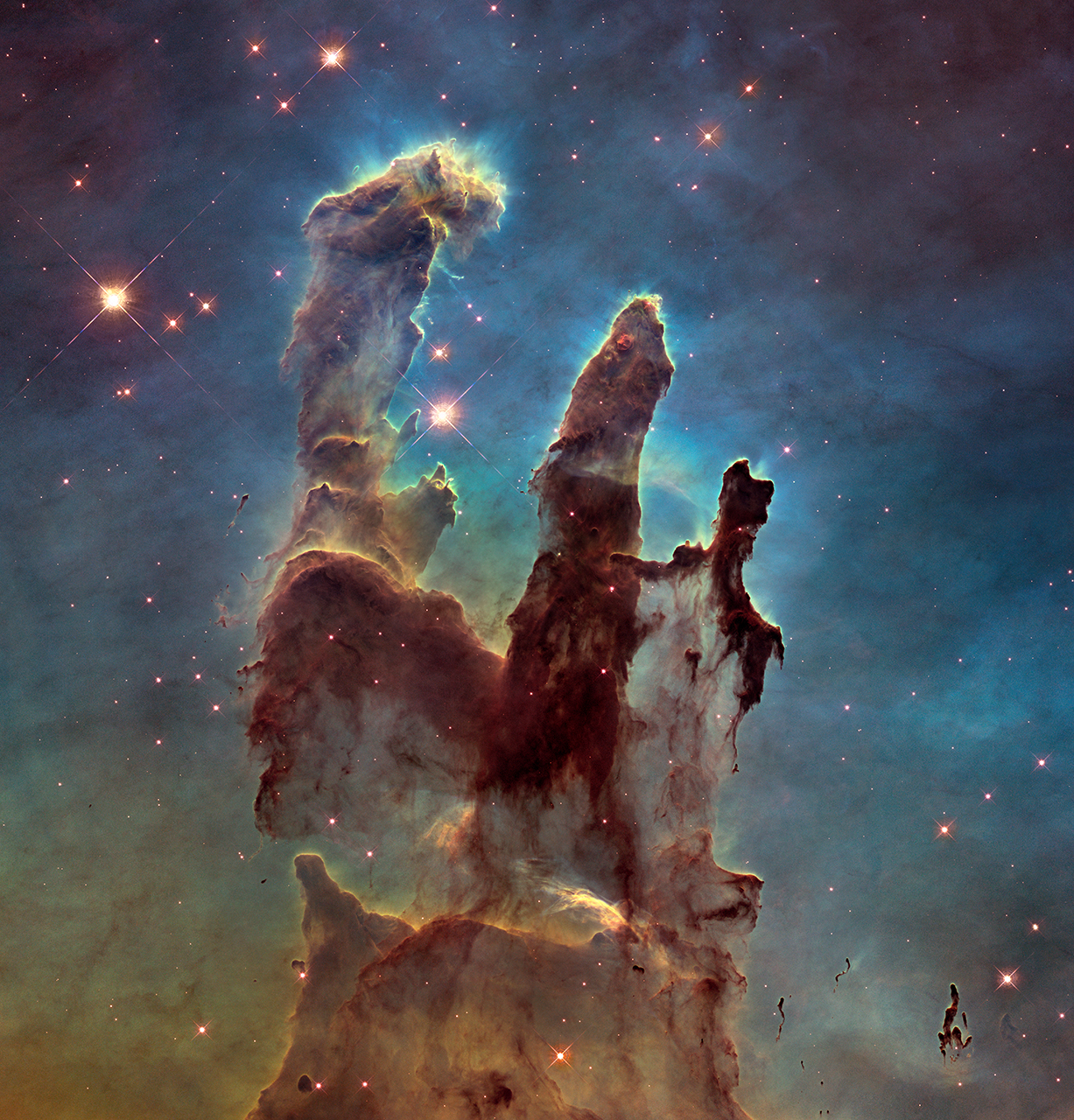
Dual-band / duo-band. A narrowband filter that passes only two slices of spectrum — Hydrogen-alpha (656nm, red) and Oxygen-III (501nm, teal) — and blocks nearly everything else, including most artificial light pollution. ZWO's Seestar line calls this its LP (light pollution) filter; DwarfLab's Dwarf 3 calls its version the duo-band filter. Functionally they're the same idea: emission nebulae like the Lagoon and Eagle Nebula genuinely glow at those two wavelengths, so isolating them turns a washed-out smudge into visible structure, even from a driveway under a orange sky glow.
When to use which
| Target type | Filter | Why |
|---|---|---|
| Emission nebulae (Lagoon, Eagle, Trifid, Rosette) | Dual-band / duo-band | Isolates the wavelengths the gas actually emits |
| Galaxies (Andromeda, Whirlpool, Triangulum) | UV/IR cut or none | Galaxies are broadband; narrowband throws away most of the light |
| Star clusters (Pleiades, Double Cluster) | UV/IR cut or none | Same reason — reflection and starlight are broadband |
| The Moon and planets | UV/IR cut or none | Reflected sunlight is broadband; narrowband adds nothing and dims the image |
| Reflection nebulae (Pleiades' blue glow) | UV/IR cut or none | Reflection nebulae shine by scattering broadband starlight, not by emitting narrowband light |
The one mistake that ruins the most sessions
Forgetting to switch off the nebula filter after a nebula session, then shooting a galaxy or the Moon the same night and getting a dim, magenta-tinted result. If a target looks unexpectedly faint or oddly colored in the live stack, check the filter setting before you second-guess your exposure or integration time — it's the more common culprit. Our first-night guide calls this out as one of the three classic beginner mistakes for exactly this reason.
Buying and upgrading
Most smart telescopes — the Seestar S30/S50 line and the Dwarf 3 among them — include both filter types built into an internal wheel or slot, switchable from the app with no hardware to swap. That's one of the real advantages of the category over older DSLR-plus-mount setups, where a comparable dual-band filter is a separate $150-250 accessory. If you're deciding which scope to buy in the first place, our price-tier buying guide covers what each tier includes.
