August is the month the sky rewards patience. The core targets from July are sinking earlier every night, but Cygnus — right overhead through the late summer — is quietly the richest smart-telescope real estate in the northern sky. And this year, the Perseid meteor shower peaks on a New Moon, which hasn't happened since 2018. If you own a smart scope, August 12–13 is the calendar-block-it night. New to any of this? The first-night setup guide covers the basics before you head out.
New Moon lands August 12, giving you a dark window from roughly August 8 through August 16. Warm air, short nights, big targets. Here's the plan.
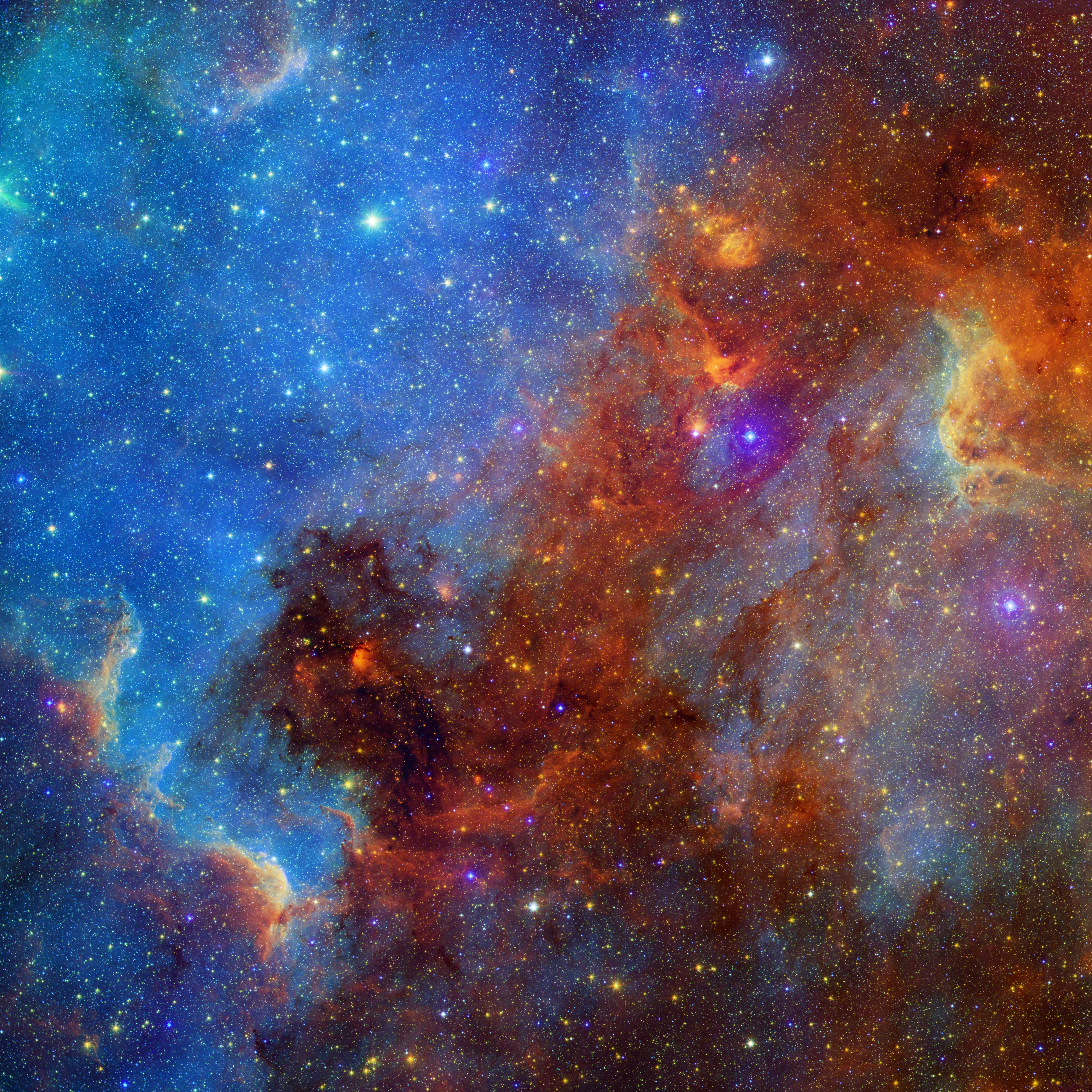
The headliner: North America Nebula (NGC 7000)
If you image one deep-sky target in August, make it NGC 7000. The nebula is huge — about four times the width of the full Moon — which is why the phrase "mosaic mode" keeps coming up in every writeup. A single Seestar or Dwarf frame doesn't fit it. You either accept a cropped view of the "Gulf of Mexico" region (which is actually the most photogenic part) or you stitch panels.
| Setting | Seestar S50 | Dwarf 3 |
|---|---|---|
| Filter | LP (dual-band) | Duo-band |
| Exposure | 10s subs | 15s subs |
| Integration | 90–180 min | 90–180 min |
| Framing | Mosaic (4–6 panels) or crop to "Gulf" | Mosaic (2–3 panels) |
The North America Nebula transits nearly overhead from mid-northern latitudes in early August — roughly 11 PM to 1 AM local time. Give the mosaic a full run: NGC 7000 rewards integration more than most emission nebulae because its brightness varies wildly across the shape, and shorter stacks look uneven. Running settings from either scope translate directly if you're on a Dwarf 3; see the full review for the rest of its quirks and pick one up on Amazon if you're deciding.
The Perseid angle: shoot wide, not deep
The Perseids peak the night of August 12–13, and this is the best Perseid year since 2018 because the peak lands on a New Moon. Rates under a genuinely dark sky can hit 90+ meteors per hour between 1 AM and 4 AM, when the radiant in Perseus is highest.
Smart telescopes are not meteor cameras by default — the deep-sky field of view is too narrow and the sub exposures are too long to catch a fast streak cleanly. Two workarounds actually work:
- Dwarf 3 wide-angle lens. The Dwarf 3's built-in wide-field lens covers a much larger patch of sky than its main tele. Set it running on 4-second exposures pointed toward Cassiopeia or northeast Perseus, let it stack a couple hundred frames, and any meteors that landed in the field will show up as bright streaks in the individual subs. Save subs, not just the stack — you want the streaks preserved rather than averaged away.
- Seestar scenery mode. Same idea, wider field. Point it high toward the radiant, short exposures, save frames.
Best practice: run the meteor rig on one scope, run a deep-sky stack (North America, Ring Nebula, Veil, or M27) on the other. The Perseid peak night with no Moon is a rare opportunity, but a two-hour NGC 7000 mosaic is a rare opportunity every clear August evening. Don't skip one for the other if you have both scopes. If you own a single one, split the night — meteors 1–4 AM, deep sky before and after.
The reliable seconds
Veil Nebula (NGC 6960/6992). The supernova remnant sits right next to Cygnus and responds beautifully to a dual-band filter. Two panels covers the Eastern Veil and Western Veil separately; a mosaic ties them into the full loop.
Pelican Nebula (IC 5070). Immediately west of NGC 7000, shares the same dust lanes. Frame it with the S30's or Dwarf 3's wider field and you can catch both nebulae in a single mosaic sweep. A great "run this after your North America stack" target since you barely have to move the scope.
Ring Nebula (M57). Small but bright, high overhead in Lyra after 10 PM. Perfect fill target between longer sessions — 45 minutes gets you real color and the central star, and it doesn't demand mosaic time. Full settings in the Ring Nebula guide.
The August 28 partial lunar eclipse
If you're in the Americas, set an alarm for the pre-dawn hours of August 28: this is a deep partial lunar eclipse, 96% of the disk covered by Earth's umbra, so functionally the entire Moon goes red. Both Seestar and Dwarf have dedicated lunar modes — the trick is dropping exposure as coverage grows. The umbral shadow is dramatically darker than the sunlit portion, so a normal Moon-mode exposure will blow the bright sliver to white. Bracket: shoot a full Moon setting, then step exposure down two or three stops for the totality-adjacent frames.
Around the full Moon itself, deep-sky contrast dies for a few nights — pivot to lunar work and start planning the September session.
Still deciding what to shoot with? Our price-tier buying guide covers every option from $399 up, the filter guide explains why dual-band on and dual-band off are both correct answers depending on the target, and the Siril processing guide is what turns a decent stack into a genuinely good photo.
Next month: Cygnus targets stay strong but Andromeda takes over the second half of the night, and Orion is up before dawn. The September plan publishes on the 1st.