The Vaonis Vespera Pro 2 is the flagship of the new Vespera generation, launched alongside the Vespera 3 in 2026 and replacing the original Vespera Pro at the same $2,990 price. It keeps the 50 mm f/4.9 optical assembly that the Vespera 3 uses but adds a much larger 12.5 megapixel Sony IMX676 square sensor, 225 GB of internal storage, and full manual control over exposure, gain, and calibration frames — the three things that separate a smart telescope you point at the sky from one you actually process data from. Whether the Pro 2 is the right scope for you comes down to a single question: are you going to touch a 16-bit FITS file after the session ends?
Quick verdict — 4.5 / 5
The Vespera Pro 2 is the highest-resolution smart telescope you can buy right now, and the only one at this price with genuine manual control and 16-bit RAW export. Best for: buyers who process their own stacks in Siril or PixInsight, want the largest mosaic field in the category, and are willing to pay $500 over the Vespera 3 for the extra sensor, storage, and control. Skip it if you never plan to leave the app — the Vespera 3 gives you the same optics for less. Also skip if aperture-per-dollar is your metric; the Celestron Origin Mark II puts a 152 mm RASA in the same conversation for $4,299.
 Vaonis Vespera Pro 250 mm f/4.9 quadruplet APO, 12.5 MP IMX676 square sensor, 225 GB storage, 11-hour battery
For where the Pro 2 sits against everything else at this price tier, our smart telescope buying guide by price tier puts it in context alongside the Origin Mark II, Unistellar Odyssey Pro, and the outgoing Vespera Pro (still available at closeout pricing in some regions).
What's actually new versus the original Vespera Pro
Three real changes and one soft one. The real changes: the IMX676 sensor delivers 12.5 megapixels on a 1:1 square 7.0 × 7.0 mm format with 2 µm pixels, up from the older Pro's smaller sensor; internal storage jumps to 225 GB, enough for a multi-night mosaic project without needing to offload; and the new optical assembly uses lanthanum S-FPL52 glass in a redesigned quadruplet formula shared with the Vespera 3. USB-C at 30 MB/s lets you empty the drive fast. The soft change is Vaonis's marketing around edge-to-edge sharpness — the Space.com launch coverage called the new optics the sharpest Vaonis has shipped, but that claim is easy to make and hard to independently verify at launch. Owner side-by-sides against the original Pro are still limited; hedge accordingly.
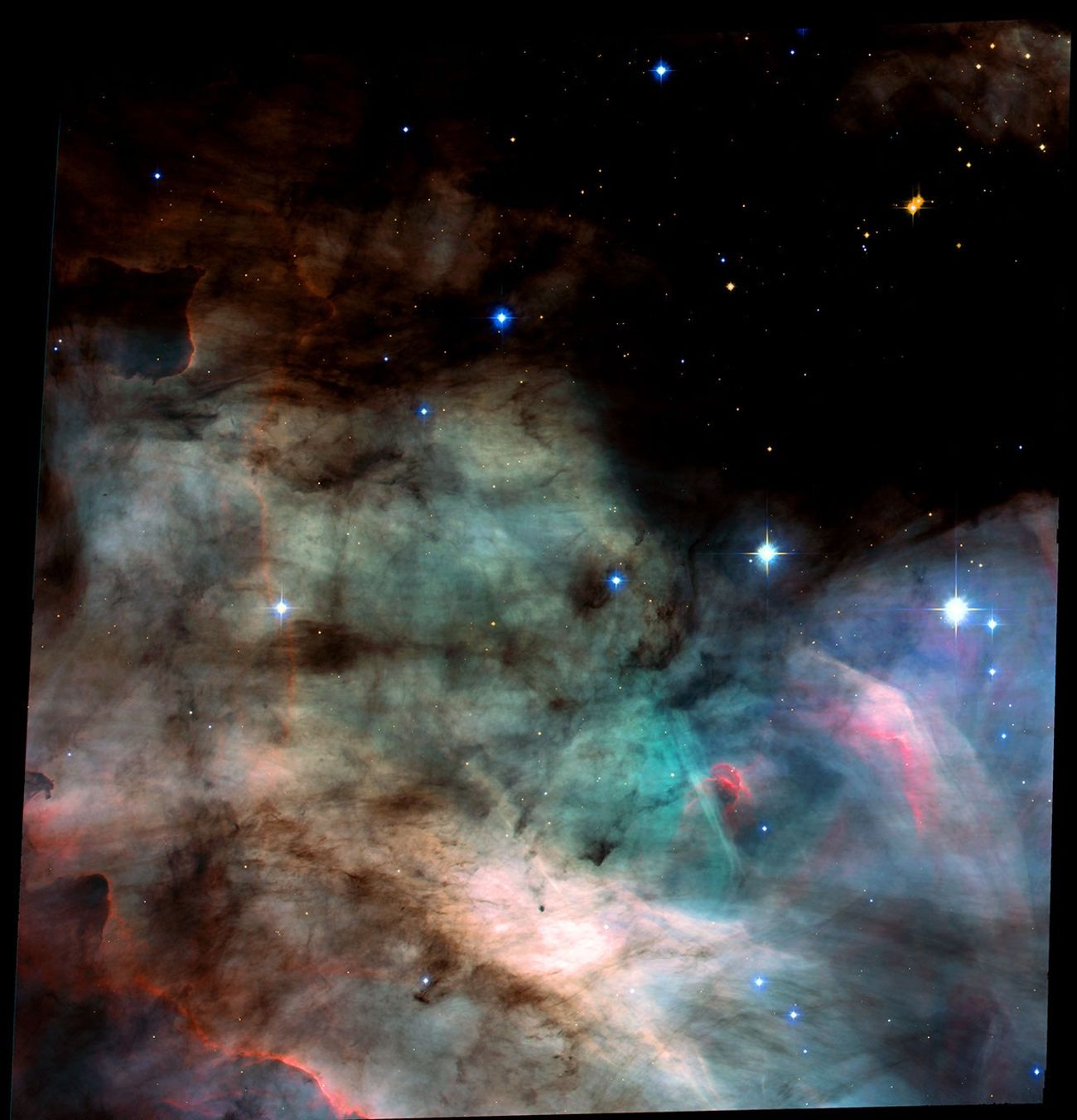
Mosaic mode is the standout capability that survives from the previous Pro. Native field of view is 1.6° × 1.6°, but Vaonis's CovalENS mosaic engine can stitch up to 4.18° × 2.45° at up to 50 megapixels — the largest field on any smart telescope. The multi-night resume feature means you can frame the target once and add integration time across three or four nights without losing your alignment. On wide targets like the North America Nebula complex or the full Andromeda halo, that matters. Our mosaic mode explainer walks through when this feature earns its keep and when a single-frame capture is smarter.
The specs, in one place
| Spec | Vespera Pro 2 |
|---|---|
| Aperture | 50 mm |
| Focal length | 245 mm |
| Focal ratio | f/4.9 |
| Optical design | Quadruplet apochromatic, lanthanum S-FPL52 glass |
| Sensor | Sony IMX676, 12.5 MP color, 1:1 square, 1/1.6" format |
| Pixel size | 2 µm |
| Native FoV | 1.6° × 1.6° |
| Mosaic FoV (max) | 4.18° × 2.45° at up to 50 MP |
| Resolution | 1.6 arcsec/pixel |
| Storage | 225 GB internal, USB-C 30 MB/s offload |
| RAW export | 16-bit FITS |
| Battery life | 11 hours |
| Weight | 5 kg (11 lb), carbon fibre tripod included |
| Warranty | 5 years |
| Included at launch | City Light Suppression filter + Vespera backpack |
Specs pulled directly from Vaonis's Vespera Pro 2 product page — confirm against the current listing before ordering.
Who it's actually for
The Vespera Pro 2 is not a step up from the Vespera 3 for beginners. The two scopes share optics, tripod, and battery. What the Pro 2 adds is workflow — manual gain and exposure control, 16-bit FITS output, calibration frame capture, and enough storage to hold a real project. If your imaging pipeline ends at "share to Instagram from the Singularity app," the extra $500 buys you nothing you can see. If your pipeline includes stretching stacks in Siril, removing gradients in GraXpert, and pushing color balance in a real editor, the Pro 2 is the scope Vaonis built for you.
The other buyer is the mosaic photographer. Full multi-night resume on a 50 MP canvas is genuinely rare — Unistellar's Odyssey Pro doesn't do it, DwarfLab's Dwarf 3 doesn't do it at anywhere near this resolution, and the Seestar line's mosaic mode is capped much lower. If you want to frame a wide target once and come back to it across a week of clear nights, this is the tool.
Pros
- Highest native resolution of any smart telescope on the market (12.5 MP square sensor)
- Full manual control: exposure, gain, calibration frames, 16-bit FITS export
- 225 GB storage is enough headroom for real projects; USB-C offload is fast
- Multi-night mosaic resume — genuinely differentiated capability
- 5-year warranty and CLS filter + backpack included at launch
Cons
- $2,990 is a lot to pay for a 50 mm aperture; light-bucket alternatives exist at similar prices
- Singularity-only, no ASCOM or third-party app control
- Independent long-term reliability data is still thin at launch
- The improvement over the outgoing Vespera Pro is real but not dramatic; if you already own one, upgrading is hard to justify
Bottom line
If you're already deep enough in this hobby to process your own data, the Vespera Pro 2 is the correct pick in the Vaonis lineup and one of the two or three scopes worth considering at this price. If you're not — if you're going to look at the JPEGs in the app and be happy — save $500 and buy the Vespera 3 instead. Same optics, same battery, same tripod, different sensor and control philosophy. The Pro 2 badge only pays for itself if you're going to use the workflow it enables.
Vaonis Vespera Pro 250 mm f/4.9 quadruplet APO, 12.5 MP IMX676 square sensor, 225 GB storage, 11-hour battery
FAQ
How much does the Vaonis Vespera Pro 2 cost?
Vaonis lists the Vespera Pro 2 at €2,990 on its official store, and the US launch price is $2,990 — the same price the outgoing Vespera Pro carried, per Vaonis's own product page. At launch it also includes a City Light Suppression filter and the Vespera backpack at no extra charge. Verify current pricing at purchase time, since Amazon third-party sellers can drift above or below MSRP.
What's the real difference between the Vespera 3 and the Vespera Pro 2?
They share the same 50 mm f/4.9 optical assembly and the same body form factor. The Pro 2 uses a larger 12.5 MP Sony IMX676 square sensor (versus the Vespera 3's IMX585), ships with 225 GB of onboard storage (versus 115 GB), and unlocks manual control over exposure, gain, and calibration frames plus 16-bit FITS RAW export. The Pro 2 costs $500 more. If you plan to process your data in Siril or PixInsight, the Pro 2 is the one designed for that workflow.
Do you actually get more detail from the 12.5 MP sensor?
In principle, yes — on targets that resolve fine structure and are bright enough to feed the smaller 2 µm pixels enough signal. Bright emission nebulae and open clusters benefit clearly. On faint broadband galaxies the improvement is less obvious than the megapixel count suggests, because signal-to-noise still dominates over resolution. Independent side-by-sides are still limited; treat Vaonis's own imagery as best-case rather than typical.
Can you use the Vespera Pro 2 with third-party astronomy software?
No. Like every Vaonis scope, the Pro 2 is driven exclusively through the Singularity app and its LumENS AI companion. There's no ASCOM Alpaca driver, no open API, no NINA support. You can, however, export the 16-bit FITS RAW files off the scope over USB-C at 30 MB/s and process them in Siril, PixInsight, or Astro Pixel Processor — that's what the manual controls and large storage are built for.
How does the Vespera Pro 2 compare to the Celestron Origin Mark II?
Different tools. The Origin Mark II is a 6-inch RASA at f/2.2 with 102 mm of aperture reserve over the Vespera and dramatically faster optics for broadband targets, but it weighs 40+ pounds and costs $4,299. The Vespera Pro 2 is 5 kg and $2,990, with a much smaller native field of view but multi-night mosaic capture and full RAW export. See our Origin vs Vespera 3 comparison for the same tradeoffs, only more so at the Pro 2 tier.