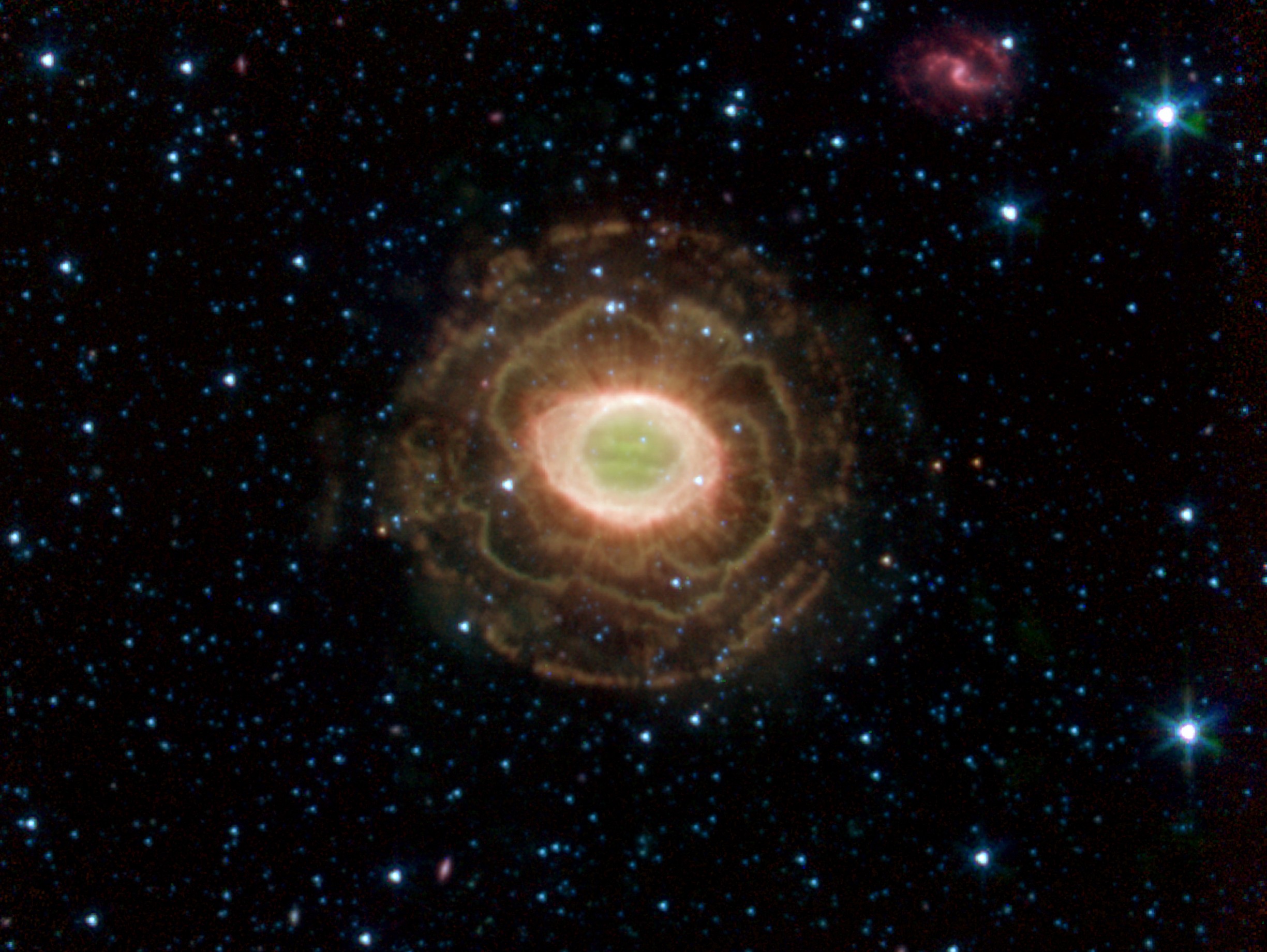
The Ring Nebula is the opposite problem from Andromeda: instead of being too big for your smart telescope's field of view, M57 is so small — about 1.5 by 1 arcminutes, a fifteenth the width of the full Moon — that it barely registers as more than a bright dot on the live-stack preview. Don't let that fool you. It's one of the brightest, easiest, most rewarding targets in the summer sky, and it needs almost none of the mosaic wrangling that makes galaxies frustrating.
Why this one is easy
At magnitude 8.8, the Ring Nebula is bright for a deep-sky object, and it sits in Lyra right next to Vega, one of the easiest stars in the sky to locate — no star-hopping required, GoTo finds it instantly. The real skill here isn't hunting for a faint smudge, it's exposing for a small, bright target without blowing out its core.
The target card
| Data | |
|---|---|
| Type | Planetary nebula |
| Constellation | Lyra |
| Apparent size | ~1.5' × 1' |
| Distance | ~2,570 light-years |
| Magnitude | 8.8 |
| Best months | June–September (culminates in August) |
| Difficulty | Easy to find, small in-frame |
Filter: this is the exception to the rule
Our filters guide covers the general rule: dual-band/duo-band filters are for emission nebulae, off for everything broadband. The Ring Nebula breaks that pattern. As a planetary nebula, M57 shines strongly in Oxygen-III, one of the two wavelengths a dual-band or duo-band filter isolates, so the Seestar LP filter or the Dwarf 3's duo-band filter both genuinely help here rather than costing you light the way they would on a galaxy (see the manufacturers' own Seestar and Dwarf 3 spec pages for the filter-wheel details).
Settings by scope
Seestar S50 / S30. LP (dual-band) filter on. 10-20s subs. 20-30 minutes gets a clean, well-exposed ring; push to 60+ minutes if you want a shot at the faint outer halo.
Dwarf 3. Duo-band filter on the tele lens. The 8.3MP sensor gives you real cropping room afterward, which matters more here than on almost any other target since M57 fills so little of the raw frame.
The one thing to get right
Don't judge exposure by how the ring looks at 5 minutes — the core is bright enough to look "done" fast, which tempts people to stop early and miss the faint halo entirely. Let it run the full 20-30 minutes even though the live preview looks finished halfway through. If you want to chase the central white dwarf and outer halo detail, that's genuinely an hour-plus target and not guaranteed on sub-$1,000 apertures.
Shooting through August? Check our monthly targets guide for what else is well-placed alongside M57 this season, and see the price-tier buying guide if you're still deciding which scope handles small targets best.